

Why Sun Safety Is Important in Both Workplaces and Everyday Life
With the weather improving and more daylight hours, we are spending more time in the sun during commutes, leisure activities, sports, and other outdoor activities. As a result, summer can provide positive effects on our health and overall wellbeing. Sunshine helps boost mood, encourages movement, promotes vitamin D production, and regulates sleep cycles.
However, along with the positive effects of sunshine comes a health message that we need to keep our skin healthy and protected from overexposure to harmful ultraviolet rays that can lead to skin cancer. A balance must be maintained to enjoy the sunshine while protecting ourselves.
In the UK, skin cancer ranks among the most common types of cancer, and its incidence rate continues to grow. Although skin cancer is not always dangerous, certain types, such as melanoma, can pose a severe threat to health. Every year, thousands of people are diagnosed with various forms of skin cancer, and over 2,500 people die from melanoma skin cancer in the UK.
The leading risk factor for skin cancer that can be prevented by taking protective actions is overexposure to ultraviolet radiation from the sun or artificial sources like sunbeds. Sunburn is an indication of skin damage that increases the risk of skin cancer significantly.
It Is UV Radiation, Not High Temperatures
Contrary to popular belief, overexposure to ultraviolet radiation occurs not only during hot weather and vacations abroad but also in the UK when the temperature is relatively low, there is a breeze, or clouds are present in the sky.
That is why you can get burnt while driving, sitting in the garden, watching children’s sports games, walking at lunchtime, working in a garden, being engaged in outdoor activities, playing sports outside, riding a bicycle for one hour, which somehow stretches into three hours. Public health guidelines recommend thinking about skin protection when the UV index is 3 or higher.
Lines of Defense against the Sun
The safest and most effective strategy to maintain sun safety involves layering different measures. That is why sun safety is best achieved using several strategies rather than relying solely on one.
Clothing
Where appropriate, cover your body with lightweight clothing that provides UV protection. Long sleeved clothes, breathable materials, and specially designed UV protection clothing can all help prevent sunburn. Cyclists can use arm screens, caps, and summer clothing as additional protection while riding their bicycles.
Hat
A broad rimmed hat will protect your face, ears, and neck from direct sunlight. When cycling, a lightweight cap worn under the helmet will protect your scalp and forehead.
Sunglasses
Use sunglasses with certified UV protection (CE or UKCA mark) to shield your eyes from UV damage. In addition, sunglasses can protect your eyes from road debris, glare, and wind while cycling.
Shade and Timing
Seek shade during the hottest and brightest hours of the day, typically between 11 am and 3 pm. Try to schedule outdoor activities, training, and long distance riding outside of these hours, preferably in the morning or late afternoon.
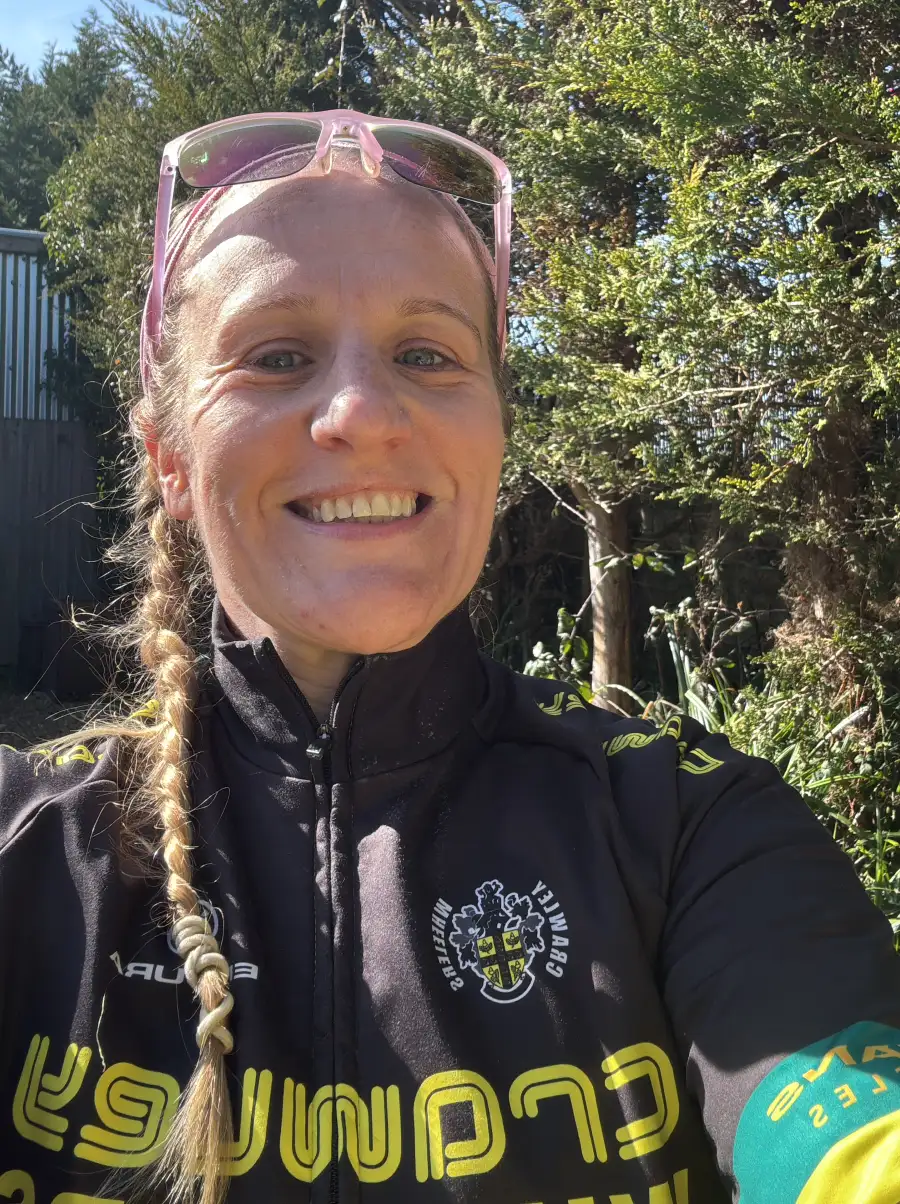 Sunscreen
Think of sunscreen as another line of defense rather than a primary measure for protecting your skin from ultraviolet radiation.
Good practices in applying sunscreen are as follows:
• Sunscreen lotion with SPF 30 or higher;
• High UVA protection (rating of 4 or 5 stars, or special logo);
• Applying sunscreen before going out;
• Applying sunscreen at least every two hours;
• Applying sunscreen again after sweating or swimming;
• Not forgetting to apply sunscreen to the ears, head, neck, hands, feet, and lips.
Most cyclists fail to apply sunscreen to the backs of their legs, head, nose, and hands, leaving behind recognizable tan lines.
Heat, Hydration, and Wellbeing
Sun exposure and warm weather tend to happen simultaneously. Heat can influence our cognitive function and physical performance, especially during physical activity and work.
Avoid dehydration by:
• Drinking water throughout the day
• Drinking plenty of water at all times of the day
• Taking regular breaks in cool areas
• Drinking water after training or other strenuous outdoor activities
• Bringing water for walks, rides, or trips.
Look out for symptoms such as headaches, dizziness, nausea, cramping, tiredness, confusion, or excessive sweating.
Who Is at Increased Risk?
Some individuals require additional care in maintaining their skin health and preventing sunburn and skin cancer, such as:
• Workers engaged in outdoor work;
• Fair skinned individuals or those prone to sunburn;
• Individuals with numerous moles or freckles;
• Individuals with a family history of skin cancer;
• People previously diagnosed with skin cancer; and
• The elderly or persons with certain diseases.
Checking Your Skin
Detecting skin cancer in its early stages is essential. Get familiar with your skin and consult a doctor if you observe any changes.
Here are the ABCDE criteria for detecting early stage skin cancer:
• Asymmetry;
• Border irregularity;
• Various colours;
• Diameter exceeding 6 mm; and
• Evolving and changing in size, form, or colour.
Sun Safety in the Workplace
It is necessary to consider sun exposure and heat as occupational hazards in the workplace, especially when employees are engaged in outdoor work, regularly travel, or wear personal protective equipment.
Some helpful measures include:
• Plan work outside peak UV times where possible;
• Provide employees with shaded resting places;
• Ensure access to drinking water;
• Arrange frequent breaks;
• Provide appropriate clothing or personal protective equipment; and
• Encourage early reporting of symptoms.
Conclusion
Enjoying summer and having fun does not mean that you should neglect sun safety. A few simple steps can make a significant impact, both in the short term and long term. It means understanding UV radiation, protecting your skin, hydrating, and recognizing early warning signs of skin cancer.
Whether you are working, having a family barbecue, or going for a long ride with a café stop, enjoy the sunshine in moderation. From everyone here at Global OHS, have a good time, stay safe, and enjoy the sunshine responsibly.
Please do read a few of our other insights on this site to learn more about Occupational Health.


